When “Agile” Change Means Doing the Same Old Things
In project management, change initiatives often aim to improve workflows, team dynamics, and overall productivity. But, sometimes, companies approach change by simply rebranding old habits rather than implementing real shifts.
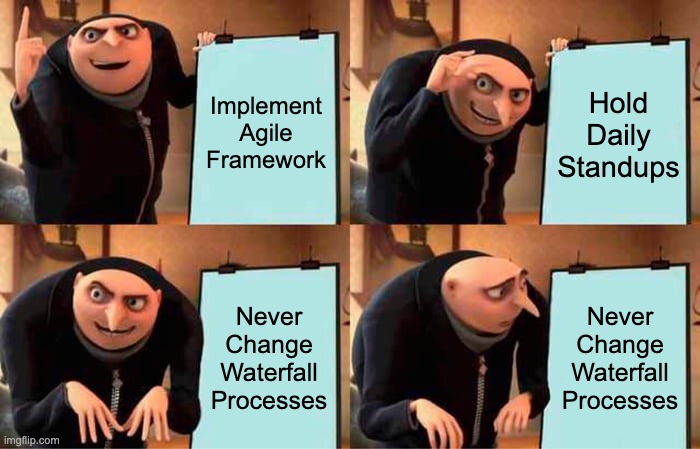
The “Gru’s Plan” meme from Despicable Me captures this perfectly with the sequence:
- “Implement agile framework.”
- “Hold daily stand-ups.”
- “Never change waterfall processes.”
- Gru stares at the last point in confusion.
This humorous sequence highlights two key biases that lead organizations to embrace only the appearance of change, without truly transforming their approach. Let’s dive into these biases and how we can avoid falling into the same traps.
1. Status Quo Bias: The Comfort of the Familiar
Status quo bias is the tendency to favor what’s familiar and resist actual change. In this case, the company claims it’s “implementing agile,” adding daily stand-ups and using new terminology, but it’s still operating with a rigid, waterfall approach in the background. The company is comfortable with how it has always managed projects and, rather than embracing agile’s iterative nature, it holds onto old habits that feel safe.
This bias can result in “agile” frameworks that are agile in name only—providing the illusion of change without the flexibility agile requires. Teams hold daily stand-ups, but project phases are still sequential, goals are static, and feedback isn’t actively integrated.
Lesson: Real transformation requires moving beyond surface-level changes. Teams need to challenge long-standing processes and be willing to let go of what’s comfortable to achieve new goals. Before implementing agile, ask if there’s a genuine commitment to iterative feedback, adaptive planning, and collaboration. Without these, “agile” won’t actually solve problems—it’ll only add new labels.
2. Confirmation Bias: Selective Embracing of “Change” That Supports Old Processes
Confirmation bias is the tendency to seek out information that confirms existing beliefs or practices. Here, the company picks out agile practices that support their existing waterfall processes—like daily stand-ups for communication—while ignoring elements that would fundamentally alter the approach, such as adaptive planning and prioritizing collaboration. The company selectively chooses parts of agile that reinforce current practices rather than challenge them.
This bias often leads teams to adopt only the elements of change that feel familiar, causing confusion when “change” doesn’t bring expected results. Gru’s confused face in the meme highlights this—he’s staring at the realization that their “agile” framework is just a waterfall process in disguise.
Lesson: To truly adopt a new approach, it’s essential to engage with all of its core principles. When evaluating frameworks like agile, question if you’re integrating all its values, not just those that support pre-existing practices. Teams that recognize and mitigate confirmation bias are better equipped to fully embrace and benefit from new methodologies.
Next Time You See the Meme…
The next time you’re in a meeting where “agile” is the buzzword but old processes are still in place, remember Gru’s plan. Ask yourself and your team: Are we really changing, or just dressing up our old habits with new language? Use this meme as a quick reminder to look deeper at proposed changes and consider whether they’re bringing genuine transformation or just new labels.
A real shift means questioning assumptions, experimenting with true agile principles, and being open to rethinking the way you work. When you face “change” that feels oddly familiar, let Gru’s confused face remind you to push for real evolution in your processes, not just a facelift for the status quo.