Ignoring Warning Signs Leads to Predictable Outcomes
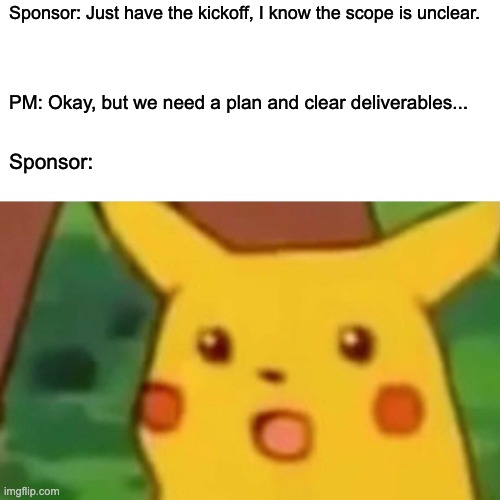
If you’ve spent any time in project management, you’re probably familiar with the frustration of warning a sponsor or stakeholder about the risks of unclear objectives, only to be met with dismissal. Later, when the project hits roadblocks or fails, the same sponsor is shocked at the outcome, like the famous “Surprised Pikachu” meme.
The caption for this version reads:
Sponsor: “Just have the kickoff, I know the scope is unclear.”
PM: “But we need clear objectives and deliverables.”
Sponsor: Surprised Pikachu face.
This meme perfectly encapsulates the breakdown that happens when leaders push ahead without proper planning and then express surprise when things don’t go as expected. Let’s examine two key biases that often lead to this scenario, and what you can learn from them.
1. Optimism Bias: Everything Will Work Out—Right?
Optimism bias leads people to believe that things will turn out better than they realistically will. In this case, the sponsor is operating under the assumption that the project can kick off smoothly, even with unclear objectives and deliverables. They brush aside the project manager’s concerns, thinking, “It’ll be fine—we’ll figure it out as we go.” This misplaced confidence can lead to serious issues down the line, as unclear scope and objectives make it difficult to manage expectations, allocate resources, or stay on schedule.
When the inevitable happens—like scope creep, missed deadlines, or unmet expectations—the sponsor is caught off guard, much like Pikachu’s surprised face. They fail to recognize that the warning signs were there from the beginning.
Lesson: Overcoming optimism bias requires recognizing that a project’s success depends on clear planning and defined goals. Before diving into a kickoff, take the time to establish specific, measurable objectives. Ask yourself: Are we rushing into this because we’re too confident in our ability to adapt later? If so, it’s time to step back and refine the plan before moving forward.
2. Planning Fallacy: Underestimating the Effort Required
The planning fallacy refers to the tendency to underestimate how much time, effort, or resources a project will require. This happens because people focus too much on the desired outcome and ignore potential setbacks. In the meme, the sponsor believes that even without clear objectives, the project will stay on course. They assume the team can move forward with minimal disruption, despite the lack of detailed planning.
When things go wrong, the sponsor is shocked, having underestimated how much more challenging the project would be without clear deliverables. By failing to account for the complexities that unclear scope introduces, the sponsor sets the project up for failure.
Lesson: To combat the planning fallacy, it’s crucial to take a realistic view of the project from the outset. Acknowledge the risks and complexities that arise when the scope is unclear. Work with your team to build contingencies into the timeline and allocate time for clarifying objectives before jumping into execution. Remember: Planning isn’t a barrier to action—it’s the foundation of successful action.
Next Time You See the Meme…
The next time you’re in a kickoff meeting with a sponsor who seems eager to push forward without a clear plan, remember Surprised Pikachu. If warning signs are being ignored, and concerns about scope or deliverables are brushed aside, take a step back and reevaluate.
Ask yourself and your team: Are we falling into the optimism bias or planning fallacy? Is the sponsor assuming the project will be smooth sailing despite the lack of clarity? By addressing these issues upfront, you can avoid future surprises and keep the project on track. Use this meme as a mental trigger to prevent missteps and set up your project for success from the beginning.