Are You the Distracted Boyfriend in Your Project?
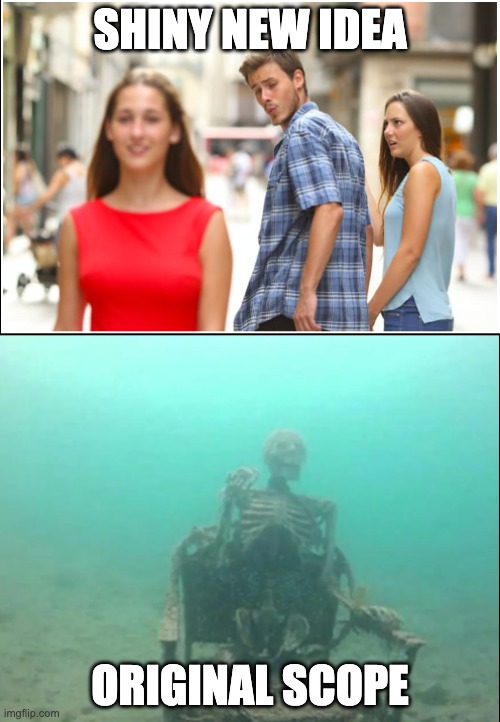
We’ve all seen the meme: the guy walking with his girlfriend (representing his current focus), but he turns his head to check out someone else, much to his girlfriend’s frustration. In project management, this meme perfectly captures the essence of shifting priorities and team indecision. The “girlfriend” is the original project plan, while the “new tech trend” is the shiny distraction pulling the team’s attention. Meanwhile, the “actual project requirements” stand there, ignored and forgotten.
Let’s break down two key biases that lead to this situation and explore how you can prevent your project from being derailed by distractions.
1. Shiny Object Syndrome: The Allure of the Latest and Greatest
Shiny Object Syndrome is exactly what it sounds like—the tendency to get distracted by new and exciting things, even if they aren’t necessary. In the meme, the distracted boyfriend represents this phenomenon as he turns away from the original plan to chase the latest trend. For project teams, this often happens when a new technology, tool, or approach seems more exciting than sticking with the current plan.
While staying up-to-date with technology is important, constantly shifting focus to incorporate the latest trend can pull the team away from the project’s actual goals. Time and resources are often wasted on trying to implement the new technology, while the original project requirements languish unfinished.
Lesson: Before jumping into the latest trend, ask yourself whether it serves the project’s goals. Is it really a better solution, or is it just the “shiny object” of the moment? Keeping your focus on the long-term objectives and requirements can help you avoid being pulled off track by trends that don’t add value.
2. Anchoring Bias: Sticking Too Close to the Original Plan
Anchoring bias causes people to rely too heavily on the first piece of information they receive when making decisions. In this case, the original project plan becomes an anchor, causing the team to resist adjusting to changes or new information. Ironically, while the meme shows the team distracted by new trends, anchoring bias also plays a role in keeping them attached to the original plan—even when the actual requirements have shifted or evolved.
Teams can fall into the trap of sticking rigidly to the original plan, because it’s familiar and feels safe, even when there’s evidence that adjustments need to be made. They may also struggle to differentiate between real, necessary updates and distractions, leading to indecision. The result? The project loses focus, and neither the original plan nor the requirements are properly addressed.
Lesson: It’s important to balance staying on course with adapting to new information. Regularly revisiting project requirements and evaluating any potential changes through the lens of how they serve the project’s objectives will help prevent both the distraction of shiny trends and the rigidity of anchoring bias.
Next Time You See the Meme…
The next time you find yourself or your team drawn toward the newest tech tool or approach mid-project, think of the distracted boyfriend meme. Ask yourself: Am I chasing a “shiny object” that won’t truly benefit the project? Or am I too anchored to the original plan to notice that the requirements have changed?
Use this meme as a reminder to stay focused on what matters most: the actual project requirements. Prioritize delivering what the project needs over indulging in distractions or staying too rigidly attached to the original plan. By finding the balance between adaptability and focus, you can lead your team to successful project completion without falling prey to unnecessary detours.