A Small Project Issue, A Big Management Reaction
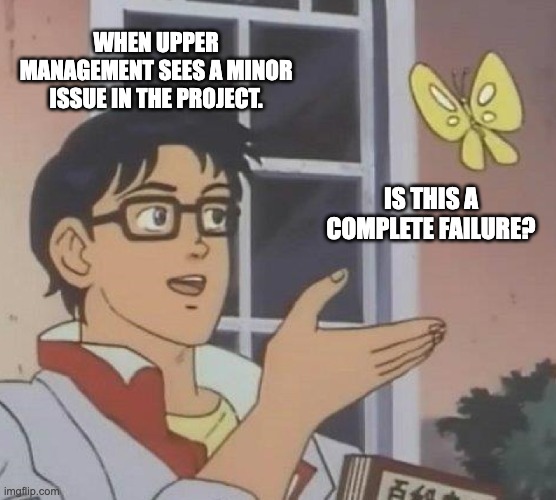
Every project has its hiccups — a missed deadline, a minor bug, or a slight miscommunication. For most teams, these are normal and manageable parts of the process. But when upper management gets wind of even the tiniest issue, it can suddenly feel like the sky is falling. What was once a small bump in the road becomes a full-blown emergency meeting with spreadsheets, status reports, and frantic check-ins. There are two primary biases and habits commonly lead to upper management viewing minor issues as major failures. Let’s break down these tendencies.
1. Catastrophizing:
Catastrophizing is a cognitive distortion where people instinctively assume the worst-case scenario. For upper management, this can mean interpreting a small, manageable issue as a sign of a deeper systemic problem — or even the beginning of project failure. Often, this reaction stems from perfectionism or a strong aversion to risk, which amplifies the perceived severity of minor setbacks.
In these moments, upper management sees the “butterfly” of a small issue and imagines it causing a storm — a harmless delay suddenly becomes a potential catastrophe. This mindset can lead to excessive monitoring, reactive decision-making, or unnecessary interventions. Ironically, those actions can escalate the problem further by disrupting the team’s natural problem-solving flow.
Impact: Constant escalation erodes team morale, drains resources from genuine priorities, and can make leadership seem disconnected from the project’s day-to-day realities.
2. Lack of Contextual Understanding (or the “Curse of Knowledge”):
The “Curse of Knowledge” describes how experts or decision-makers struggle to imagine what it’s like not to know what they know. For upper management, this often translates into a lack of appreciation for the complexities and nuances within project work — leading to unrealistic expectations or misinterpretations.
Without full context, leaders may see ordinary project hiccups as signs of failure. Because they’re removed from the daily execution, they might view every unexpected development as a red flag rather than a routine challenge that the team can handle. This disconnect can easily turn a simple issue into an unnecessary escalation.
Impact: The absence of contextual understanding breeds communication breakdowns. Teams feel pressured to over-explain minor details or defend small setbacks that don’t need intervention. Over time, this gap fosters frustration and tension, as teams perceive management as too distant to accurately gauge the project’s true health.
Small project issues are inevitable — they’re part of the natural rhythm of getting complex work done. The real challenge isn’t avoiding them but responding to them with perspective and balance. When upper management reacts with calm understanding instead of alarm, teams stay focused, solutions come faster, and trust grows stronger across the organization. Recognizing the difference between a true risk and a temporary hiccup can make all the difference in a project’s success.
At Project Radar, we help organizations bridge the gap between leadership visibility and team reality. Our tools and insights make it easier to identify real risks, filter out noise, and maintain clarity across every level of your projects. Don’t let small issues snowball — contact Project Radar today to see how we can help your team stay aligned, informed, and confident.